In a lithium battery, more hours means more cells. In a vanadium flow battery, more hours means more electrolyte. That one difference changes the economics of long-duration storage.
Two ratings, normally locked together
Every battery has two ratings: power, in kilowatts, and energy, in kilowatt-hours. In most batteries these are fixed together. Each cell brings a set amount of both, so doubling the run time means doubling the number of cells.
A flow battery separates them
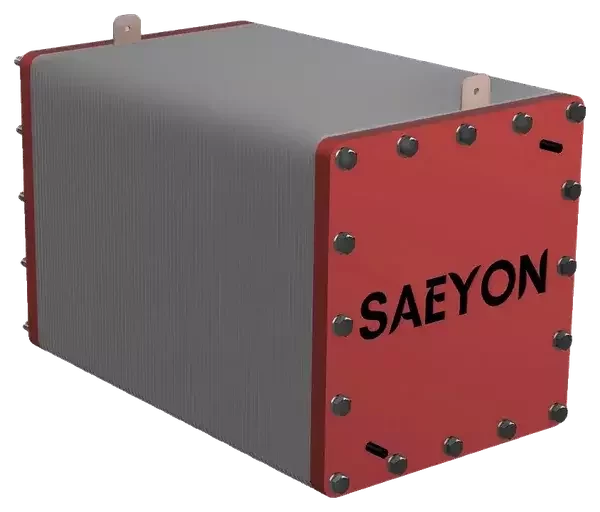
In a vanadium flow battery, the cell stack is where the reaction happens, so its size sets the power. The liquid electrolyte in the tanks is where the energy is stored, so the tank volume sets the kilowatt-hours.
For a factory that needs 100 kW for six hours, we size the stacks for the load and the tanks for 600 kWh. If the site later needs eight hours, we add electrolyte. The stacks, pumps and power electronics stay the same.
Need more hours? Add electrolyte, not more batteries.
Why it matters for your costs
Flow batteries become more cost-effective as the duration grows, because the added cost of each extra hour is mostly the electrolyte and the tank.
- Long backup for diesel generator replacement
- Solar energy stored for evening use
- Lower demand charges for industrial sites